
Prairie Health & Wellness Newsletter
Pillar of the Month
Purpose
The foundation upon which all 5 Pillars of Health stand upon.
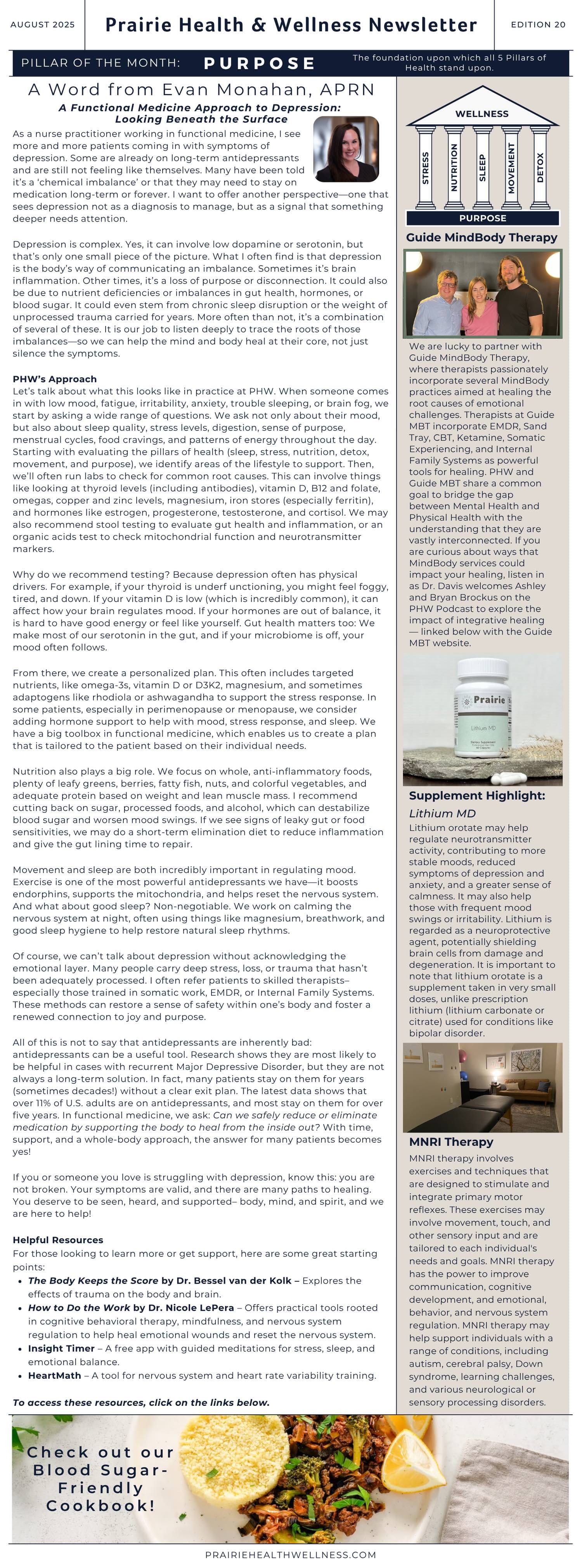
A Word from Evan Monahan, APRN
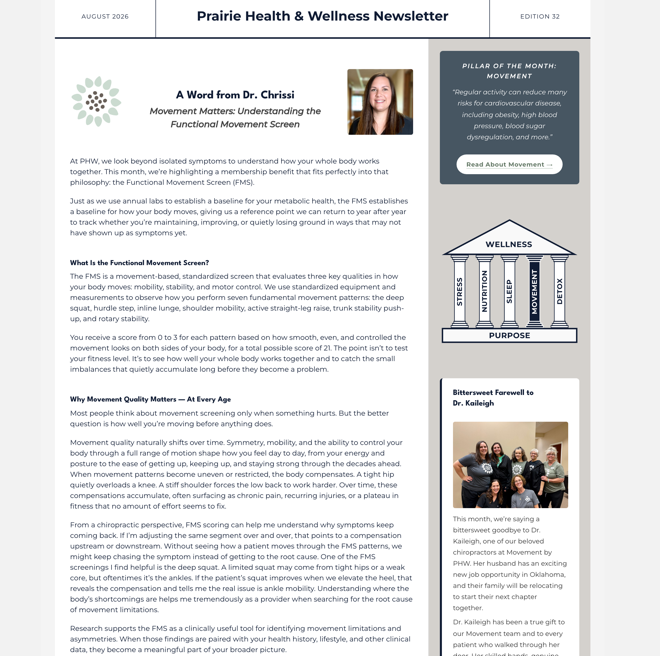
A Functional Medicine Approach to Depression
As a nurse practitioner working in functional medicine, I see more and more patients coming in with symptoms of depression. Some are already on long-term antidepressants and still not feeling like themselves. I want to offer another perspective—one that sees depression not as a diagnosis to manage, but as a signal that something deeper needs attention.
Depression is complex. It can involve low dopamine or serotonin, but that’s only one small piece. Often, depression is the body’s way of communicating an imbalance. Sometimes it’s brain inflammation. Other times, it’s a loss of purpose or disconnection. It could also be nutrient deficiencies, gut health or hormone imbalances, blood sugar issues, chronic sleep disruption, or unprocessed trauma.
PHW’s Approach
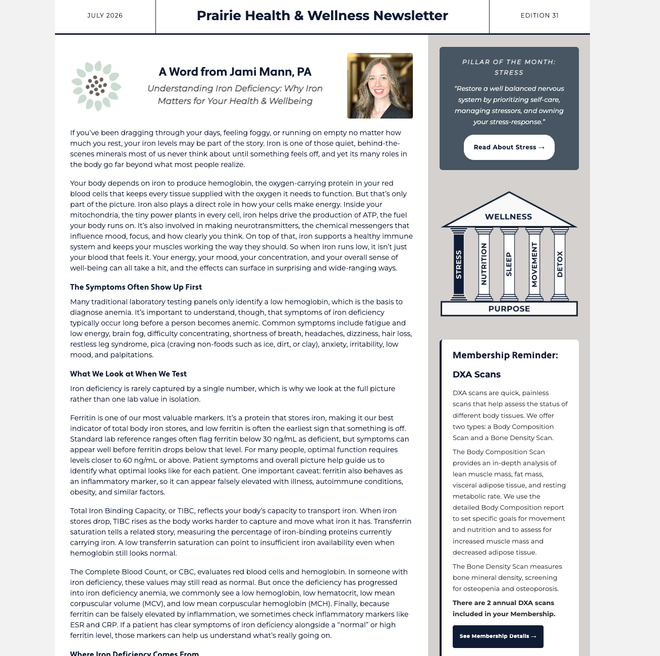
We start by evaluating the pillars of health and run labs to check for common root causes: thyroid levels, vitamin D, B12 and folate, omegas, copper and zinc, magnesium, iron stores, and hormones. We may also recommend stool testing or an organic acids test.
We create a personalized plan including targeted nutrients like omega-3s, vitamin D, magnesium, and sometimes adaptogens. In perimenopause or menopause, we consider hormone support. Nutrition focuses on whole, anti-inflammatory foods with adequate protein.
Movement is one of the most powerful antidepressants we have—it boosts endorphins, supports mitochondria, and helps reset the nervous system. And good sleep is non-negotiable.
We can’t talk about depression without acknowledging the emotional layer. I often refer patients to skilled therapists trained in somatic work, EMDR, or Internal Family Systems.
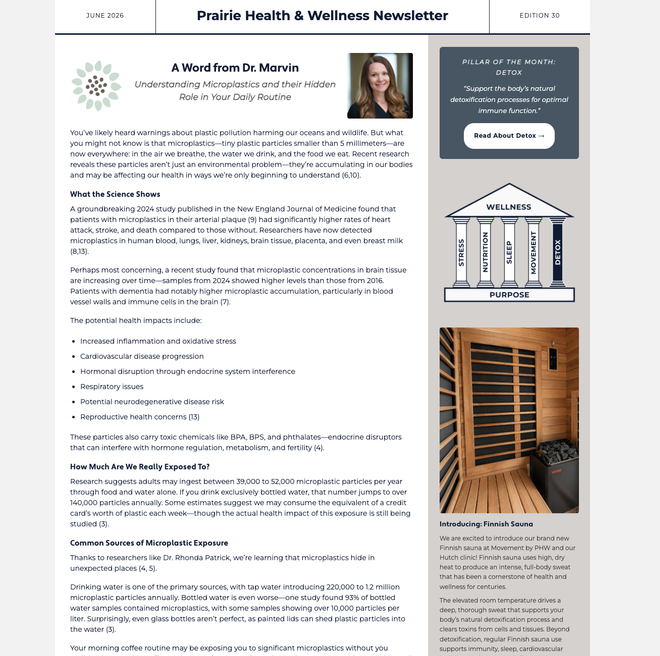
Antidepressants can be a useful tool, but they are not always a long-term solution. Over 11% of U.S. adults are on antidepressants, and most stay on them for over five years. In functional medicine, we ask: Can we safely reduce or eliminate medication by supporting the body to heal from the inside out? With time, support, and a whole-body approach, the answer for many patients becomes yes!
If you or someone you love is struggling with depression, know this: you are not broken. Your symptoms are valid, and there are many paths to healing.
🧠 Guide MindBody Therapy
We partner with Guide MindBody Therapy, where therapists incorporate EMDR, Sand Tray, CBT, Ketamine, Somatic Experiencing, and Internal Family Systems as powerful tools for healing. PHW and Guide MBT share a common goal to bridge the gap between Mental Health and Physical Health.
🧠 MNRI Therapy
MNRI therapy involves exercises designed to stimulate and integrate primary motor reflexes, helping improve communication, cognitive development, emotional behavior, and nervous system regulation.
💊 Supplement Highlight: Lithium MD
Lithium orotate may help regulate neurotransmitter activity, contributing to more stable moods, reduced symptoms of depression and anxiety, and a greater sense of calmness. It may also help those with frequent mood swings or irritability. Lithium is regarded as a neuroprotective agent. Note: lithium orotate is a supplement taken in very small doses, unlike prescription lithium used for bipolar disorder.
📌 Featured Resources
- Purpose Pillar
- Membership Details
- Online Supplement Store
- MNRI Therapy
- PHW Podcast 003: MindBody Connection with Ashley & Bryan Brockus
- Guide MindBody Therapy
- Book: The Body Keeps the Score by Dr. Bessel van der Kolk
- Book: How to do the Work by Nicole LePera
- Insight Timer App
- HeartMath Tool
- PHW Cookbook: Blood Sugar-Friendly Recipes
Want to receive our newsletter? Become a PHW member for monthly health insights delivered to your inbox.