
Prairie Health & Wellness Newsletter
Pillar of the Month
Nutrition
Quality, nutritionally dense food is a necessity of life. We must eat to live, not live to eat.
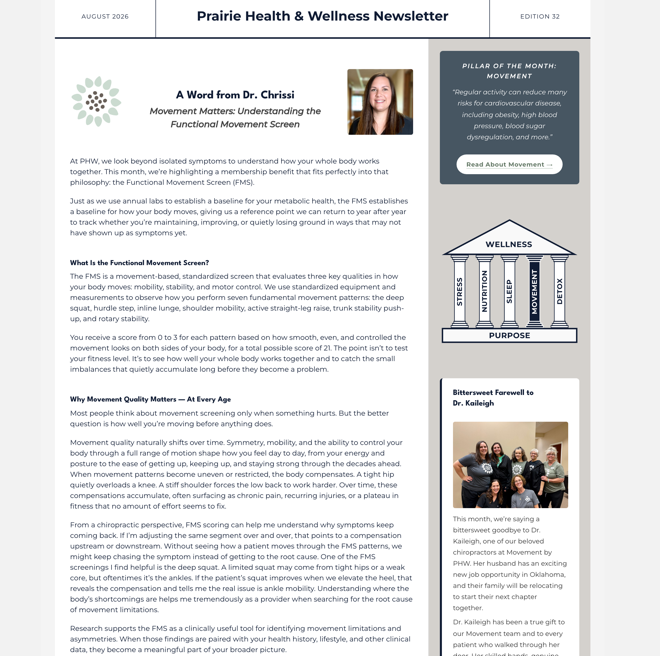
A Word from Dr. Davis
Skin Health Tips for Summer: A Functional Medicine Approach
As summer approaches, it is essential to pay special attention to our skin health. The increased sun exposure, higher temperatures, and outdoor activities can take a toll on our skin. Here are some functional tips to keep your skin healthy and glowing all summer long:
1. Hydration is Key
Staying well-hydrated is crucial for maintaining skin elasticity and overall health. Drink plenty of water throughout the day and remember that water follows salt. Electrolytes (either as a supplement or in your diet) will help the water remain intracellular. One of the easiest ways to increase electrolytes in your diet is to simply salt your food with either Himalayan salt or Redman’s salt.
2. Sun Exposure and Protection
The best protection for your skin is melanin, a natural pigment that gives your skin its color. It’s important to build melanin up the way you would a callus, a “solar callus”. Early morning sun exposure helps us create more melanin without damaging the skin. This increase in pigment is our body’s natural sunscreen. Bonus: you might remember from the April Newsletter that this early morning sun exposure can be beneficial for sleep as well. Like the animals I tend to, I will seek shade when the sun is directly overhead. If you can’t get in the shade, a wide-brimmed hat, or breathable clothing that covers you (like linen) can be helpful until you have a better solar callus. The goal is to avoid a burn which is what causes damage to the skin cell itself.
3. Nutrient-Rich Diet
Your skin reflects what you eat. Ensure your diet is rich in vitamins and minerals as well as antioxidants, particularly vitamin C, vitamin E, and omega-3 fatty acids. Think of eating the rainbow: bell peppers, fruits, and leafy greens. A sunburn happens when solar radiation outpaces the cell’s antioxidant ability. Vitamin D protects the skin’s melanin and stimulates antioxidant proliferation. We get vitamin D naturally from sun exposure, however, since we spend the majority of the time indoors under artificial light we often need to supplement this nutrient to help protect our skin from being damaged.
4. Sunscreen
Look for a sunscreen that is free of chemicals. I recommend a mineral-based sunscreen, zinc oxide like the Babo Botanicals Dr. Marvin suggested in last month’s newsletter. There are also several available that are made from tallow, a nutrient-rich fat that easily absorbs into the skin. Check ewg.org/skindeep for a list of approved sunscreens to make sure you are avoiding endocrine disruptors, carcinogens, and chemicals that have reproductive harm.
By incorporating these principles into your daily routine, you can enjoy the summer while keeping your skin healthy and radiant. Remember, healthy skin is a reflection of overall wellness, so maintaining a balanced diet, staying hydrated, and protecting your skin from the sun are not only essential steps for vibrant skin health but also for your overall well-being.
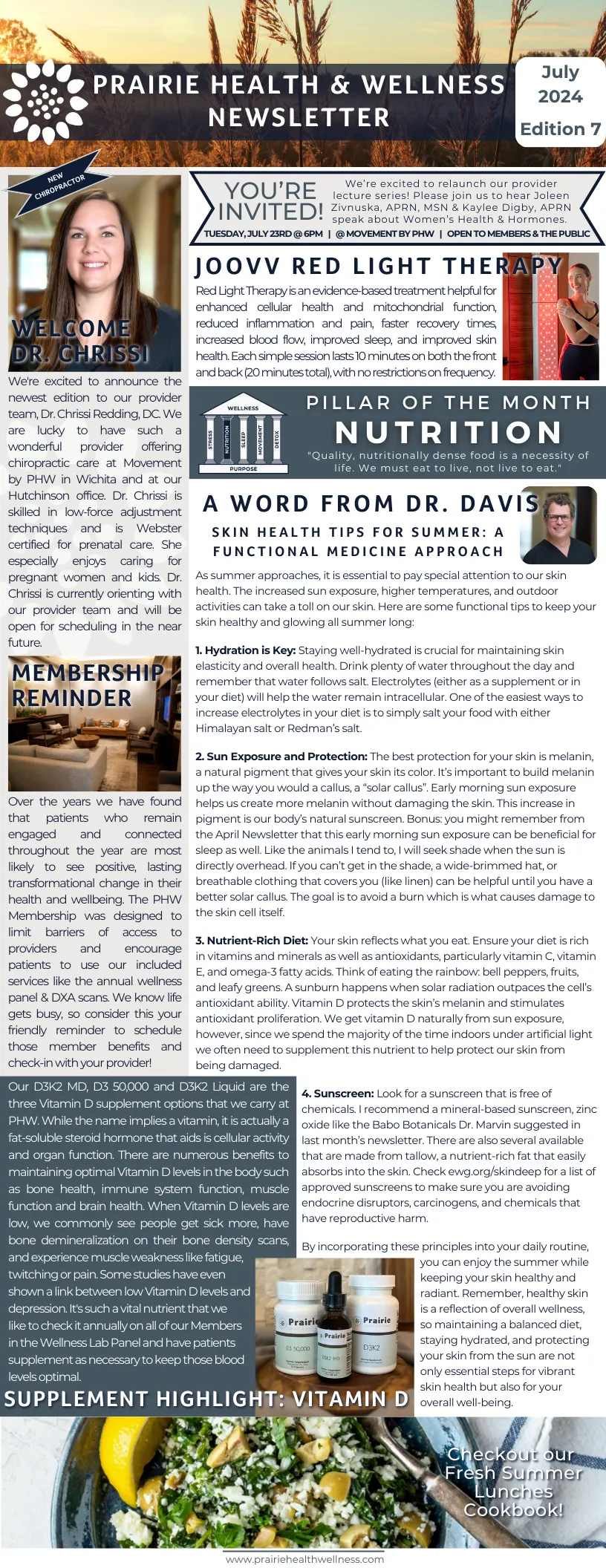
π Welcome Dr. Chrissi
We’re excited to announce the newest addition to our provider team, Dr. Chrissi Redding, DC. She is skilled in low-force adjustment techniques and is Webster certified for prenatal care. She especially enjoys caring for pregnant women and kids.
β¨ Joovv Red Light Therapy
Red Light Therapy is an evidence-based treatment helpful for enhanced cellular health and mitochondrial function, reduced inflammation and pain, faster recovery times, increased blood flow, improved sleep, and improved skin health. Each simple session lasts 10 minutes on both the front and back (20 minutes total), with no restrictions on frequency.
π Supplement Highlight: Vitamin D
Our D3K2 MD, D3 50,000 and D3K2 Liquid are the three Vitamin D supplement options that we carry at PHW. While the name implies a vitamin, it is actually a fat-soluble steroid hormone that aids in cellular activity and organ function. There are numerous benefits to maintaining optimal Vitamin D levels in the body such as bone health, immune system function, muscle function and brain health. When Vitamin D levels are low, we commonly see people get sick more, have bone demineralization on their bone density scans, and experience muscle weakness like fatigue, twitching or pain. Some studies have even shown a link between low Vitamin D levels and depression.
π Featured Resources
Want to receive our newsletter? Become a PHW member for monthly health insights delivered to your inbox.